Available stock is not sellable stock: the difference that defines the customer promise
This page is part of our content cluster on B2B sales, pricing, ERP-connected workflows, and commercial automation. If you are evaluating software or researching best practices, use the related links at the end to continue deeper.
In industrial B2B sales, few questions sound as simple as "do we have stock?". Behind that question sits a critical distinction: stock in the system is not the same as sellable stock.
A company may have physical units in the warehouse and still be unable to promise them to a customer. They may be reserved, committed, damaged, under quality control, misplaced, mislabeled, in another warehouse, assigned to a future order, or incoming with uncertain dates.
When sales cannot see that difference, it either promises incorrectly or responds too late. Both cost revenue.
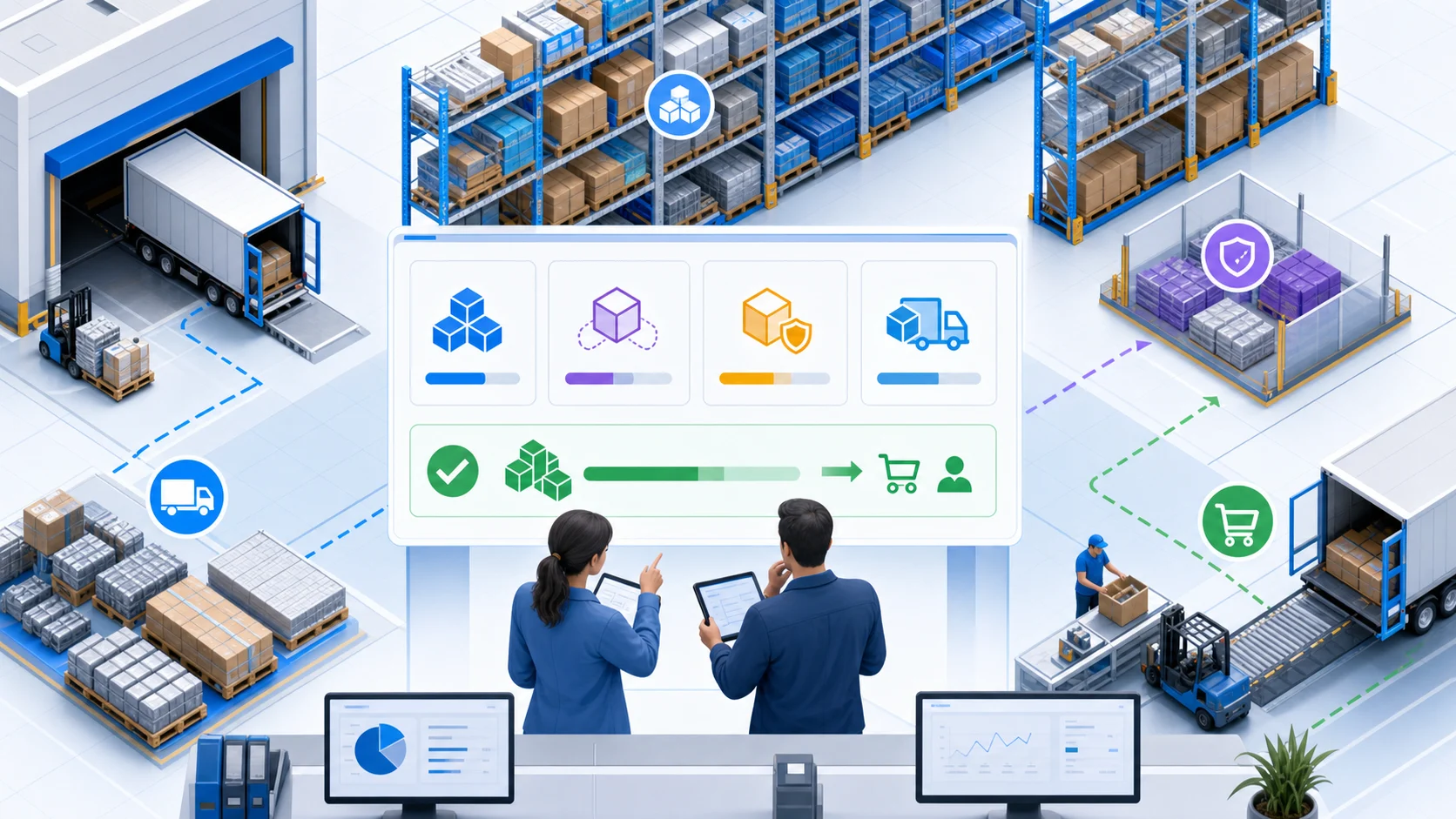
Physical stock does not answer the commercial question
Physical inventory answers how many units exist. Commercial availability answers how much can be promised, to whom, from where, and when.
| Concept | Question it answers |
|---|---|
| Physical stock | How many units are recorded? |
| Reserved stock | Which units are separated for another sale or process? |
| Committed stock | Which units are tied to orders, contracts, or future dates? |
| Quality stock | What exists but cannot be sold yet? |
| Damaged or waste stock | What exists but should not be promised? |
| Incoming stock | What is arriving and how reliable is the date? |
| Sellable stock | What can be promised today with acceptable risk? |
The relevant sales question is not "do we have stock?". It is "what stock can I promise reliably?".
Why the system is not always enough
Many companies have inventory in ERP or WMS, but the seller still calls the warehouse. That happens because the data exists, but it does not resolve the commercial decision.
Stock may be in a distant warehouse, but the customer needs delivery tomorrow. Stock may be reserved for a future order, but perhaps it can be used in the meantime. Product may be physically available, but the lot is observed. A purchase may be incoming, but the date is unreliable.
In those cases, the seller needs interpretation, not just a number.
| Situation | Commercial risk |
|---|---|
| Stock in another warehouse | Promise ignores transfer time and cost. |
| Stock reserved for a future date | Inventory is blocked unnecessarily or sold despite commitment. |
| Mislabeled product | The system shows availability that the warehouse cannot find. |
| Outdated inventory | Product is offered even though it no longer exists. |
| Lot with issue | Product is sold when it should be retained. |
| Uncertain incoming stock | A date is promised that procurement cannot guarantee. |
Inventory visibility must translate into actionable availability.
ATP: the view sales needs
In more mature operations, the concept of ATP appears: available to promise. It is not an accounting inventory report; it is a commercial answer.
A good ATP view combines physical stock, reservations, commitments, incoming stock, quality, location, customer rules, priority, dispatch, and dates.
| Data | Why it matters for ATP |
|---|---|
| On hand | Physical inventory base. |
| Reservations | Reduces what can be promised. |
| Future commitments | Helps decide whether inventory can be used between dates. |
| Incoming | Increases future availability, but with risk. |
| Quality | Filters product that cannot be sold. |
| Location | Defines fulfillment time and cost. |
| Customer priority | Guides allocation under scarcity. |
| Dispatch rules | Determines what promise can be fulfilled. |
Without ATP, the seller ends up calling someone who calculates it mentally.
Inventory and margin are connected
Availability also affects price and margin.
If product is scarce, the company may need to protect price. If it is overstocked or aging, it may want to rotate inventory. If replenishment will be expensive, selling with historical cost may destroy future margin. If dispatch requires moving product between warehouses, logistics cost changes.
| Stock condition | Pricing implication |
|---|---|
| Scarcity or high demand | Less discount, more allocation control. |
| Overstock | More commercial flexibility to rotate. |
| Rising replacement cost | Review margin before closing. |
| Stock in distant warehouse | Include logistics cost and timing. |
| Product near expiration or obsolescence | Specific commercial policy. |
Treating stock and pricing as separate decisions reduces proposal quality.
Management implications
An industrial company does not need more inventory screens. It needs sales, operations, and finance to share a definition of sellable stock.
Key questions:
- What stock can sales promise without calling the warehouse?
- Which reservations reduce availability and with what priority?
- Which incoming stock is reliable enough to quote?
- Which products exist but are not sellable?
- What rules apply when demand exceeds availability?
- How does price change with scarcity, rotation, or replacement cost?
When those answers are clear, sellers respond faster, operations receives more realistic promises, and customers get a more reliable experience.
Continue reading
Jun 28, 2026
The B2B portal that works does not replace the seller: it extends commercial capacity
Many industrial companies have invested in B2B portals hoping customers will self-serve. The idea is reasonable: if buyers can see catalog, prices, stock,...
Dec 11, 2025
Sales Processes and Their Role in the Supply Chain in Industrial Supplies Companies
1. Introduction Companies that sell supplies to manufacturers of industrial goods operate in complex supply chains, where sales processes play a critical role...
Jun 28, 2026
WhatsApp can be an official B2B sales channel if the company governs it well
In Latin American B2B sales, WhatsApp is not a marginal channel. For many buyers and sellers, it is the main channel for daily coordination. Stock questions,...
Automate your B2B sales with Recerc
Customer portal, AI-powered quotes, digital catalog and more. Everything you need to scale your commercial operation.